


10 Habits Every Elite Footballer Has: The Daily Standards That Set Top Players Apart

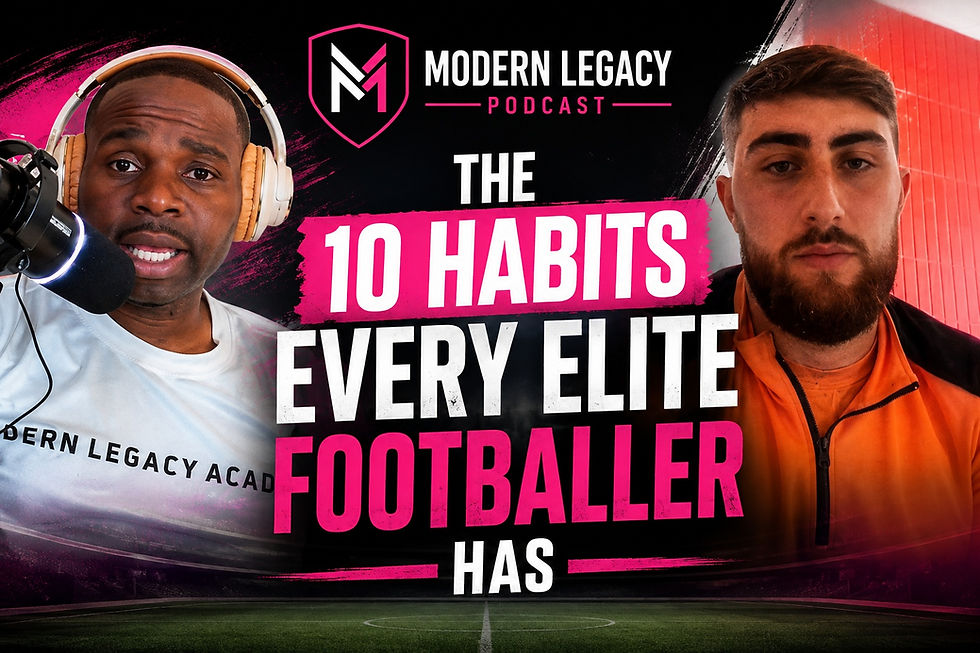
If you want to become a better footballer, talent alone is not enough. The players who keep improving, stay available, and perform consistently usually have strong habits behind the scenes - the kind that support recovery, focus, and discipline day after day.
In this post, you’ll learn the 10 habits every elite footballer has, based on a conversation from the Modern Legacy Podcast. You’ll see why simple things like sleep, nutrition, and accountability matter so much, and how small routines can make a big difference to your game. Whether you’re a player, parent, or coach, these are habits you can start applying right away.
Why Sleep Is the Foundation of Elite Performance
Sleep came up first in the conversation for a reason - it affects almost everything else.
A good night’s sleep helps your body recover, repair muscle soreness, and recharge for the next day. If you’re training hard, playing matches, or trying to improve, your body needs time to reset. Without that, you’ll feel it in your energy, your sharpness, and even your mood.
As Oisin Kelly explained, sleep is what allows your body to “be at a hundred per cent for the next day.” That matters whether you’re a professional, a youth player, or someone trying to take football seriously. If your sleep is poor, your performance usually drops with it.
One useful point from the episode was the idea of tracking sleep quality, not just sleep duration. Devices like Whoop or other fitness trackers can show how much deep sleep and REM sleep you’re getting. That data can help you spot patterns. If you sleep well, you feel it. If you don’t, you feel that too.
A simple takeaway here is to protect your night routine.
Avoid playing games or scrolling late into the night.
Aim to wind down earlier.
Keep your sleep schedule as consistent as possible.
If you want to perform better, sleep is not optional. It’s one of the most important habits elite footballers build first.
How Nutrition Supports Energy, Recovery, and Consistency
Nutrition was another major theme in the episode, and for good reason.
What you eat affects how you train, how you recover, and even how you sleep. The podcast made this point clearly: if you’re eating poorly, you’ll notice it in other areas of your life too. Heavy takeaway meals, for example, can leave you feeling less ready the next day and may even affect your sleep quality.
Oisin shared a powerful personal example. A few years ago, he was overweight at 128 kilos, then changed his nutrition and dropped to 84 kilos over a few months. That kind of transformation shows how much your food choices can change your body, your energy, and your mindset.
The key lesson is not that you need a perfect diet. It’s about building a routine you can actually stick to.
A practical approach from the conversation was the 80/20 model:
Eat home-cooked, nutritious meals most of the week.
Leave room for flexibility on weekends or after matches.
Keep the focus on consistency, not extremes.
This is especially important for parents. If you’re supporting a young player, the habits at home matter. A takeaway before a game is not the same as a takeaway after a game. Timing affects performance.
The bigger point is this: nutrition is not separate from football. It supports your sleep, recovery, energy, and long-term development. If you want to play like an elite footballer, you need to fuel like one.
Recovery Habits That Keep You Available to Play
Elite footballers do not just train hard - they recover well.
In the episode, recovery was described as a must, not a nice extra. The practical tools mentioned were simple: bands, stretching, cooldowns, and especially foam rolling. These are not glamorous habits, but they can have a huge effect on how your body feels and how often you get injured.
One of the strongest parts of the conversation was Oisin’s own experience. Before building a proper recovery routine, he was picking up muscle injuries every two to three weeks. After making foam rolling part of his daily routine for 15 minutes each morning, he went two to three years without a muscle injury. That’s a massive difference.
The message is clear: recovery is not just for injured players. It helps you stay available in the first place.
A good recovery routine can include:
Foam rolling - to help with mobility and muscle tightness.
Stretching - before and after sessions.
Cooldowns - to help your body transition out of training.
Consistency - doing it every day, not just when you feel sore.
Foam rolling was described as a way to improve blood flow, mobility, and range of motion. Whether you do it before training, after training, or in the morning, the point is to build it into your routine.
If you’re a player, parent, or coach, this is one habit worth taking seriously. You do not need expensive equipment or complicated protocols. You need consistency.
Footballer foam rolling to improve mobility and reduce injury risk]
Self-Analysis, Mistakes, and the Discipline to Keep Improving
The next habits in the episode all connect to one theme: growth.
Self-analysis helps you improve faster
The conversation strongly emphasized self-analysis after games. The idea is simple - if you want to get better, you need to look back honestly at what you did well and what needs work.
A useful method shared in the episode was:
Three things you did well
One thing you need to improve
That format is powerful because it keeps reflection focused. You’re not trying to overanalyze everything. You’re identifying what worked and where the next improvement lies.
Oisin also mentioned discussing games with his dad, who acts as his biggest critic. That’s a good reminder that feedback matters, especially when it’s honest. Sometimes the people who tell you the truth help you grow the most.
Mistakes are only bad if you repeat them
Another strong point from the episode was the idea that mistakes are learning opportunities. The key is not to make the same mistake over and over again.
That distinction matters. A mistake can be useful if it leads to adjustment. It becomes a problem when you ignore it.
The podcast framed it well: it’s better to make new mistakes than repeat old ones. New mistakes usually mean you’re learning, trying things, and stretching yourself. Repeated mistakes usually mean you’re stuck.
So after a game or training session, ask:
What happened?
Why did it happen?
What will I do differently next time?
That habit alone can speed up development.
Discipline makes everything else work
Sleep, nutrition, and recovery only work if you have discipline.
That was one of the strongest messages in the episode. Discipline is what stops one bad night’s sleep turning into three. It’s what stops one takeaway turning into a full week of poor eating. It’s what keeps recovery consistent when you don’t feel like doing it.
In other words, discipline is the system that holds the other habits together.
The podcast also made an important point about balance: you do not need to be perfect all the time. But you do need to be disciplined most of the time. The goal is consistency, not flawless behavior.
Communication, Professionalism, and Accountability
The final habits in the episode focus on how you show up around other people.
Communication keeps you connected to the game
Football is a problem-solving sport, and communication is part of solving those problems. The episode pointed out that modern players sometimes communicate less because they’re so used to technology and less used to direct interaction.
But on the pitch, simple communication matters.
Short commands like:
Go left
Go right
Drop back
Push forward
Cover me
...can make a huge difference. They help teammates make better decisions and stay switched on. They also keep you engaged in the game.
Oisin made a great point here: even if a player is not at the same level as everyone else, clear communication can help them perform better. It can talk a player through a full 90 minutes.
If you’re a coach or parent, encourage young players to speak more on the pitch. Communication is not about being loud for the sake of it. It’s about being clear, useful, and decisive.
Professionalism means doing things the right way
Professionalism was described in the episode as doing things properly, not just getting paid. That means showing standards in how you train, how you prepare, and how you carry yourself.
Why does that matter? Because doing things at 100% gives you the best chance of success. Half-effort builds half-results.
A professional mindset asks:
Am I doing this properly?
Am I giving full effort?
Can I be proud of how I handled this?
That’s a useful filter for players at any level. If you want to be treated like a serious footballer, you need to act like one first.
Accountability helps you grow faster
The final habit was accountability, and it might be one of the most important of all.
It’s easy to blame teammates, coaches, or circumstances. It’s harder - but better - to admit when you were wrong and learn from it. That applies to both self-accountability and the people around you.
The episode made a helpful distinction between:
Yes men - people who tell you what you want to hear
Realists - people who tell you the truth
Real accountability comes from surrounding yourself with people who will challenge you honestly. That could be a coach, a parent, a teammate, or a friend. If everyone around you agrees with everything you say, your growth will slow down.
The best players are usually the ones willing to look at themselves honestly and make adjustments. Accountability is what turns reflection into progress.
Frequently Asked Questions
What are the most important habits for footballers?
The most important habits are usually sleep, nutrition, recovery, discipline, and accountability. These support everything else, from performance to injury prevention.
How can young footballers build better habits?
Start small and stay consistent. A better bedtime, a simple meal routine, regular foam rolling, and post-match self-analysis can make a big difference over time.
Why is self-analysis important in football?
Self-analysis helps you identify what you did well and what needs work. It makes improvement more focused and stops you from repeating the same mistakes.
Do footballers really need recovery routines?
Yes. Recovery helps your body stay ready for training and matches. Without it, you’re more likely to feel stiff, tired, or injured.
How do parents support elite football habits?
Parents can help by setting routines at home, supporting good nutrition, encouraging sleep, and promoting honest reflection after matches.
One-Sentence Summary
Elite footballers build success through simple daily habits - better sleep, smarter nutrition, consistent recovery, honest self-analysis, and the discipline and accountability to repeat them.


Comments